Alterations to Sunny Ridge, Fort Augustus
Inverness-shire
Project Status
Complete
Project Sector
Residential
Client
Private Client
Contractor
James Greenwood Joinery Ltd
This project renovates and re-plans a 1980s home in Fort Augustus to meet the owners’ brief: a brighter, more connected family living space, improved arrival and circulation, retained bedroom numbers, and a major upgrade in energy performance—while framing the Highland landscape and maximising passive solar gain.
The original house had an uninsulated suspended timber floor, cavity block work walls and a compartmentalised plan that restricted daylight, views and comfort—setting clear spatial and sustainability challenges.
How the project design meets (and exceeds) the brief: The ground floor was reorganised around an open-plan living/kitchen/dining space aligned to the views, improving daylight, flow and usability. A damp, uninsulated porch and indirect entrance sequence were removed and the main entrance relocated to the side façade for direct access from parking, improving comfort and everyday practicality.
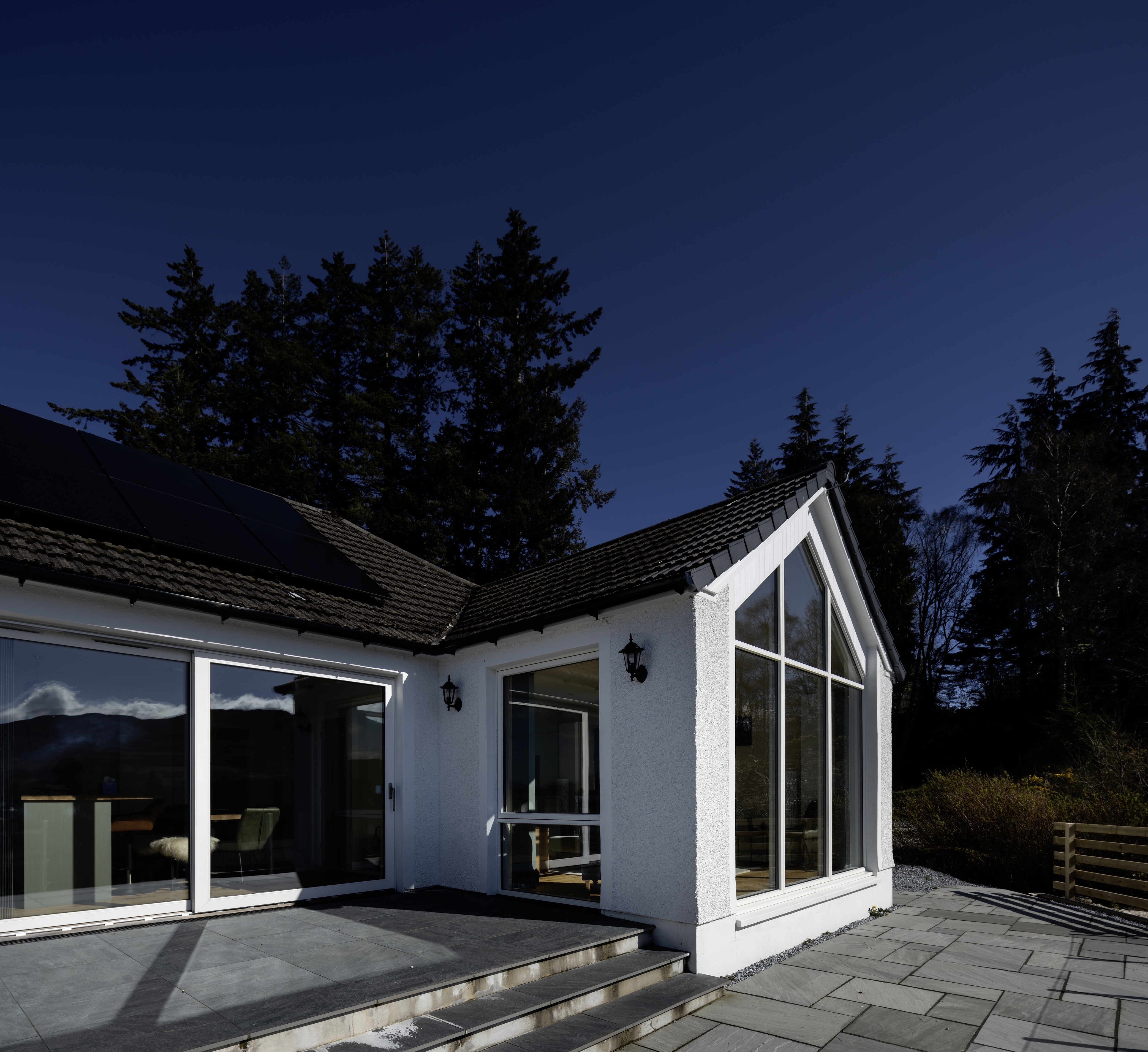
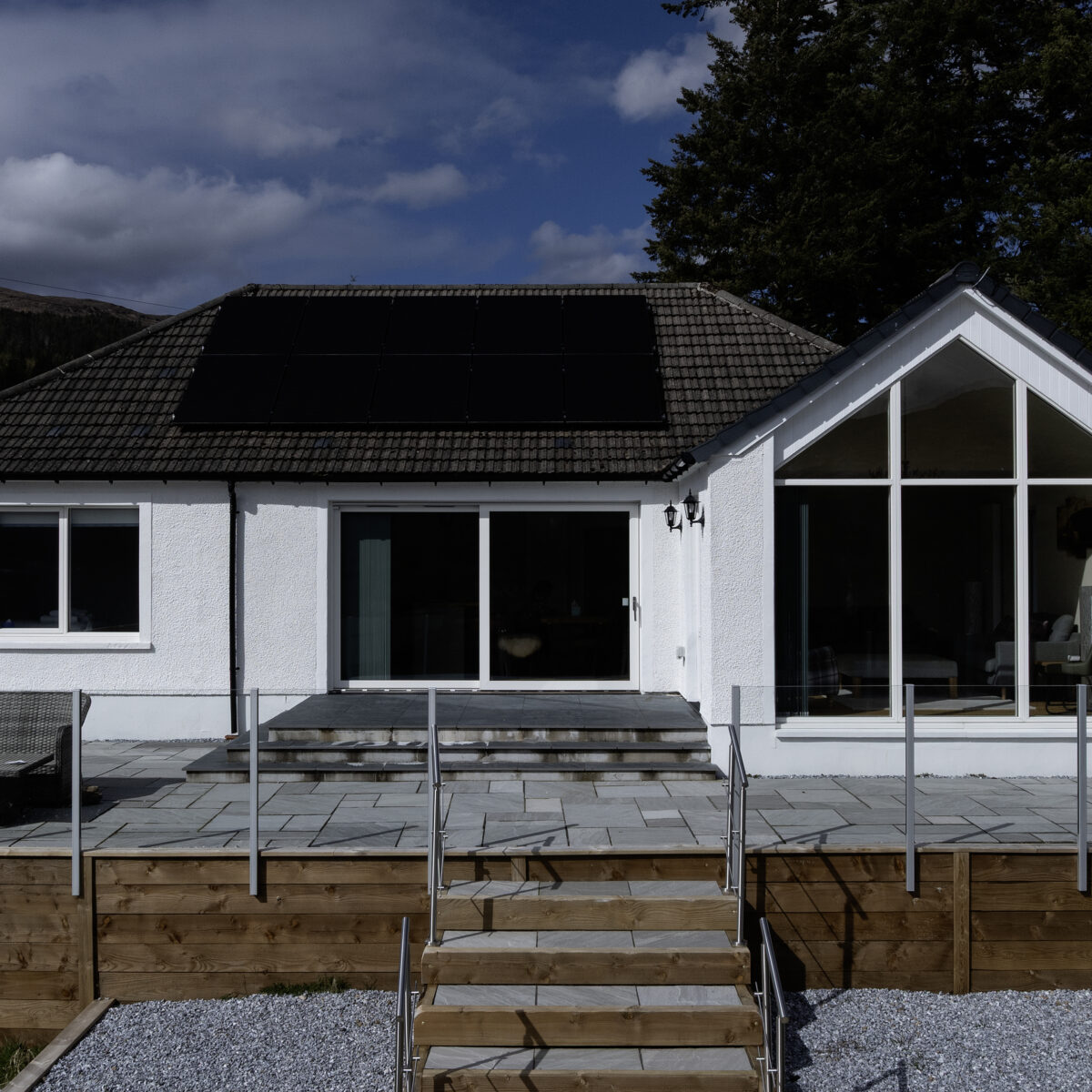
Stand-out design and innovative approach: A bold, carefully oriented glazing strategy brings the landscape into daily life. The signature apex window draws deep daylight into the plan and captures low winter sun, creating a distinctive focal point that adds spatial generosity without adding floor area.
Client engagement and collaboration: The owners were involved throughout, with iterative layout testing around routines, storage and key sightlines to the garden and loch—ensuring the open-plan arrangement, relocated entrance and terrace connection directly support how the family lives and hosts.
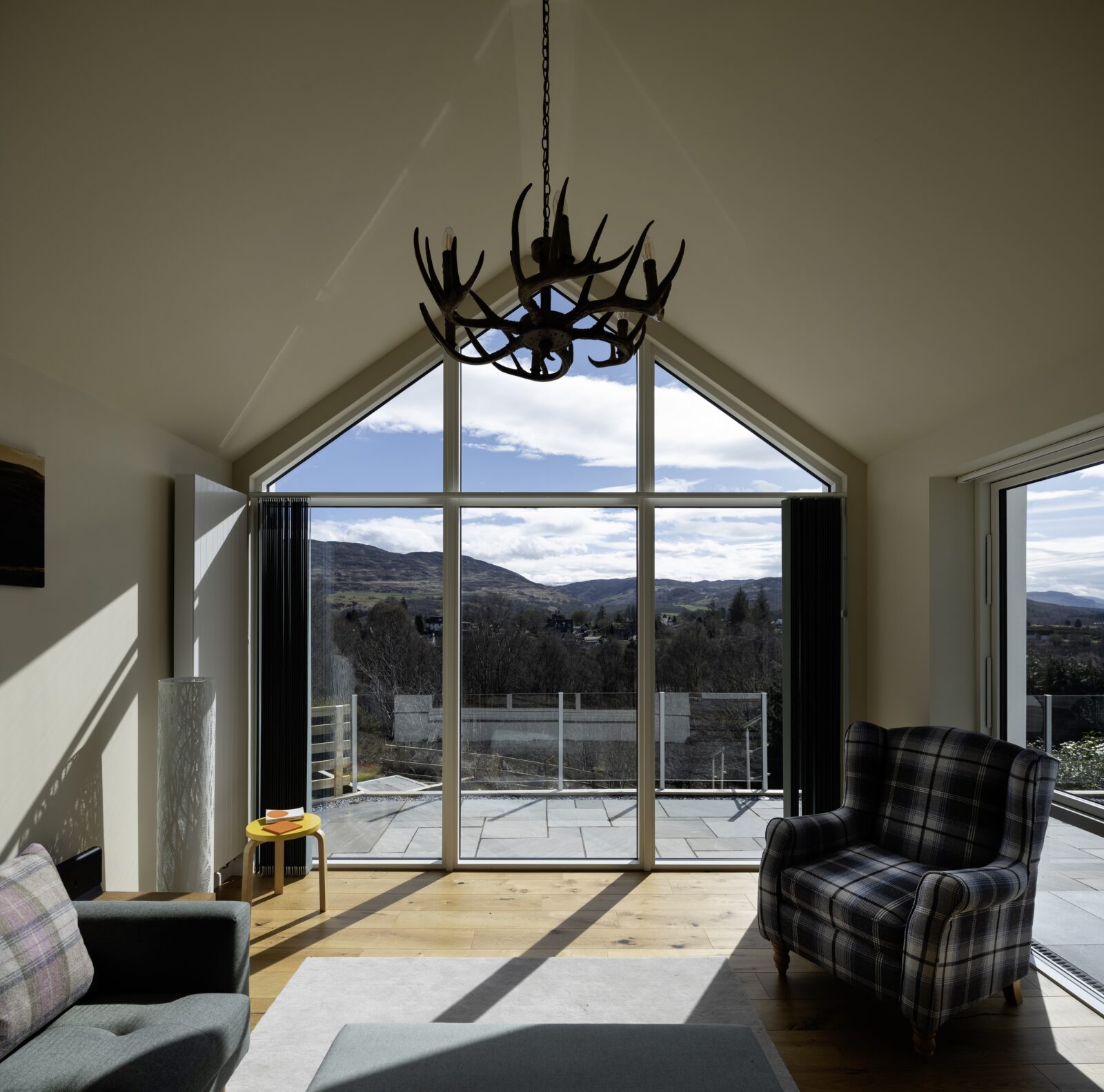
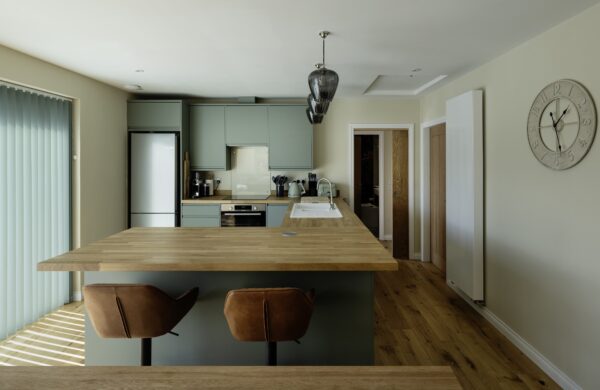
Use of space, sense of place, and design challenges overcome: Without increasing bedroom numbers, we reclaimed inefficient circulation and reassigned underperforming rooms to make the living areas feel larger and calmer. The former kitchen became a new bathroom
and utility; an additional shower room for the two larger bedrooms is concealed behind sliding doors. Large sliding doors from the kitchen/dining area open to a new terrace, extending daily life outdoors and strengthening the home’s connection to its setting.
Together, the apex window and terrace connection transform an inward-looking plan into bright, view-led rooms with a strong sense of place.
Response to the climate crisis and wider social/environmental sustainability: A fabric-first approach and low-carbon heating reduce operational energy, improve winter resilience and lower running costs. The EPC rating improved from F to B through:
Photovoltaic panels to the roof
Air-source heat pump heating system
New high-performance doors and windows
New internal insulation to cavity walls
Insulation to suspended floor
Upgraded 270mm loft insulation
Replacing costly electric storage heaters, an air-source heat pump now provides space heating and hot water. Combined with improved insulation and solar gain, the home achieves a more stable indoor environment and reduced operational carbon.
Overall, the project meets the brief with a distinctive, view-led design that improves daily living and delivers a major step-change in energy performance. Our main aim was not demolition but adaptation. The re-design was carried out with a view to the long-term reuse of the house.